Overview — Recallia Ecosystem

Making moments worth returning to.

Recallia transforms spontaneous moments into weekly reflection rituals through visual progress and AI-assisted storytelling.
Recallia
Started
May 2025
Launched
Oct 22, 2025
Platform
iOS
Team
Joshua Jenkins + Charlie Wang
Users
100+
Role
Lead Product Designer
01 — Four Systems, One Loop

Four systems. One habit loop.

Moment Creation
Capture
Sunday Timeline
Anticipation
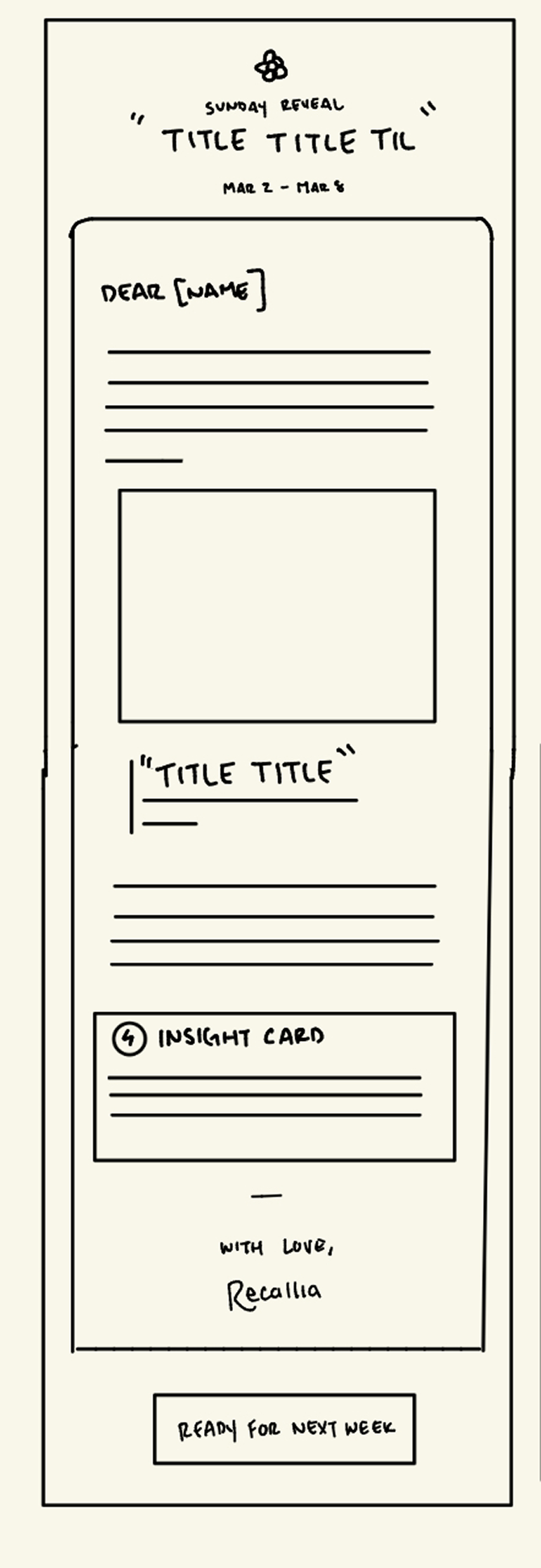
Sunday Letter
Reward
Reflection
Reflection
Return
Retention
↻ Return loops back into Moment Creation — the system has no exit, only re-entry.
02 — The Problem

Traditional journaling asks too much.

Traditional Journaling
Blank page syndrome
Emotional decay
No visible progress
Reflection depends on discipline
Hard to sustain
Recallia
Capture moments instead of entries
Preserve emotions while they’re fresh
Visual progress throughout the week
Weekly reward system
Reflection becomes habitual
03 — North Star

Designing for return, not reminders.

Mission

Make reflection effortless, fun, and rewarding.

Vision

Help people preserve the moments that shape who they are.

Principle

People don’t need reminders to journal. They need something worth returning to.

04 — Product System

A behavior loop, not a collection of features.

Notification
Input
Time + context signal
Output
App opens
Capture Moment
Input
A photo
Output
A structured moment
Timeline Growth
Input
Moments across the week
Output
Visible progress
Sunday Letter
Input
A week of moments
Output
A personal narrative
Reflection
Input
The letter
Output
Meaning, closure
Return
Input
The experience
Output
Motivation to capture again
05 — Overall Contribution

From idea to shipped product.

Product
Problem framing
Feature prioritization
Roadmapping
Research
User interviews
Community feedback
Behavioral insights
Design
Interaction design
Motion
Visual systems
AI
Prompt architecture
Personalization
Information hierarchy
Growth
Spotlight Card Show
Campus posters
User acquisition

Module 02 — Capture Loop

Moment Creation

People already capture memories. The problem isn’t getting them to take more photos. The problem is preserving context before it disappears. Moment Creation is the input layer — a capture loop designed to take under 60 seconds and stack onto a habit that already exists.

Behavioral Design Habit Stacking Friction Reduction Context Capture
02 — Moment Creation Walkthrough

The complete loop in under 60 seconds.

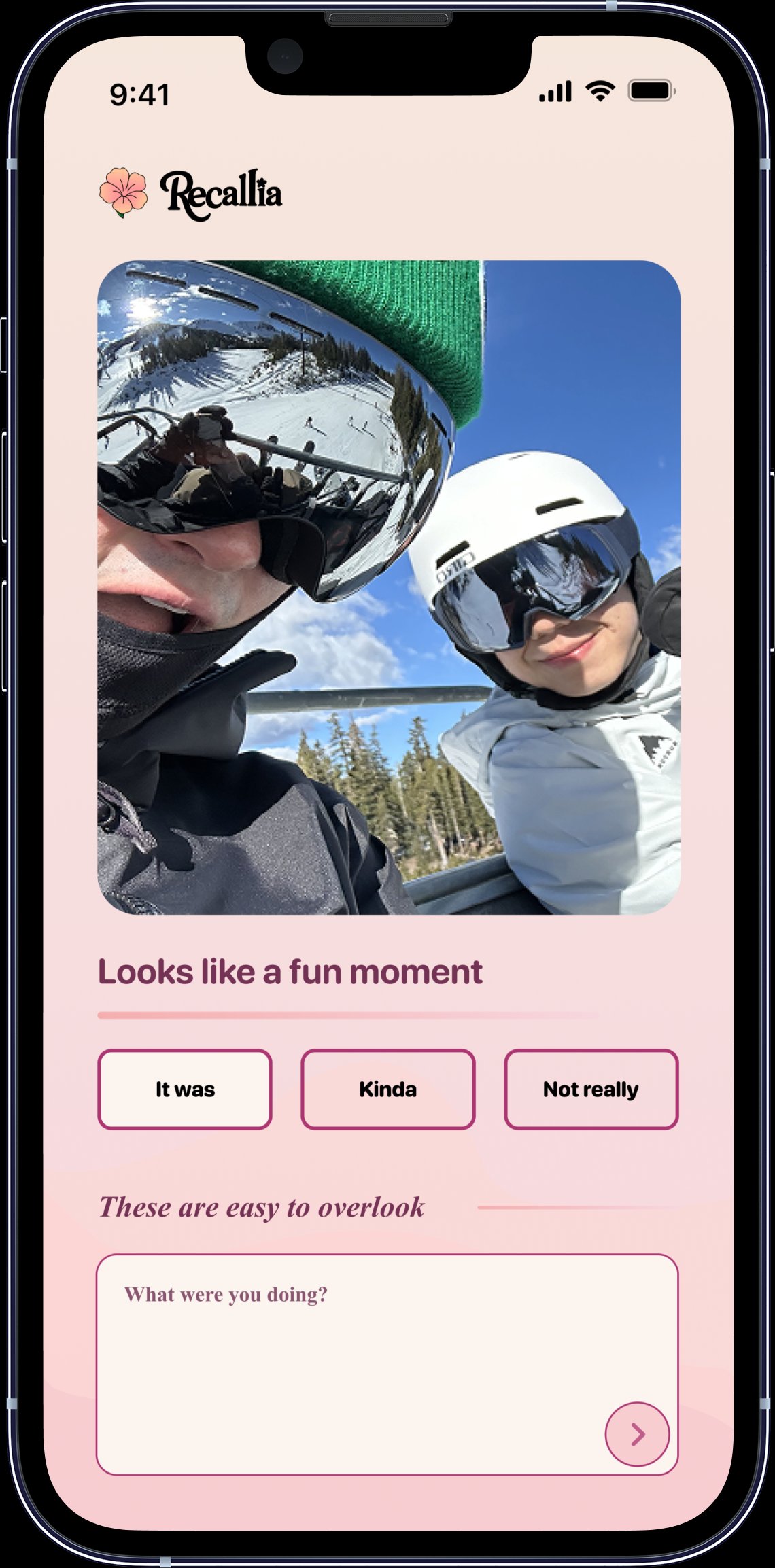
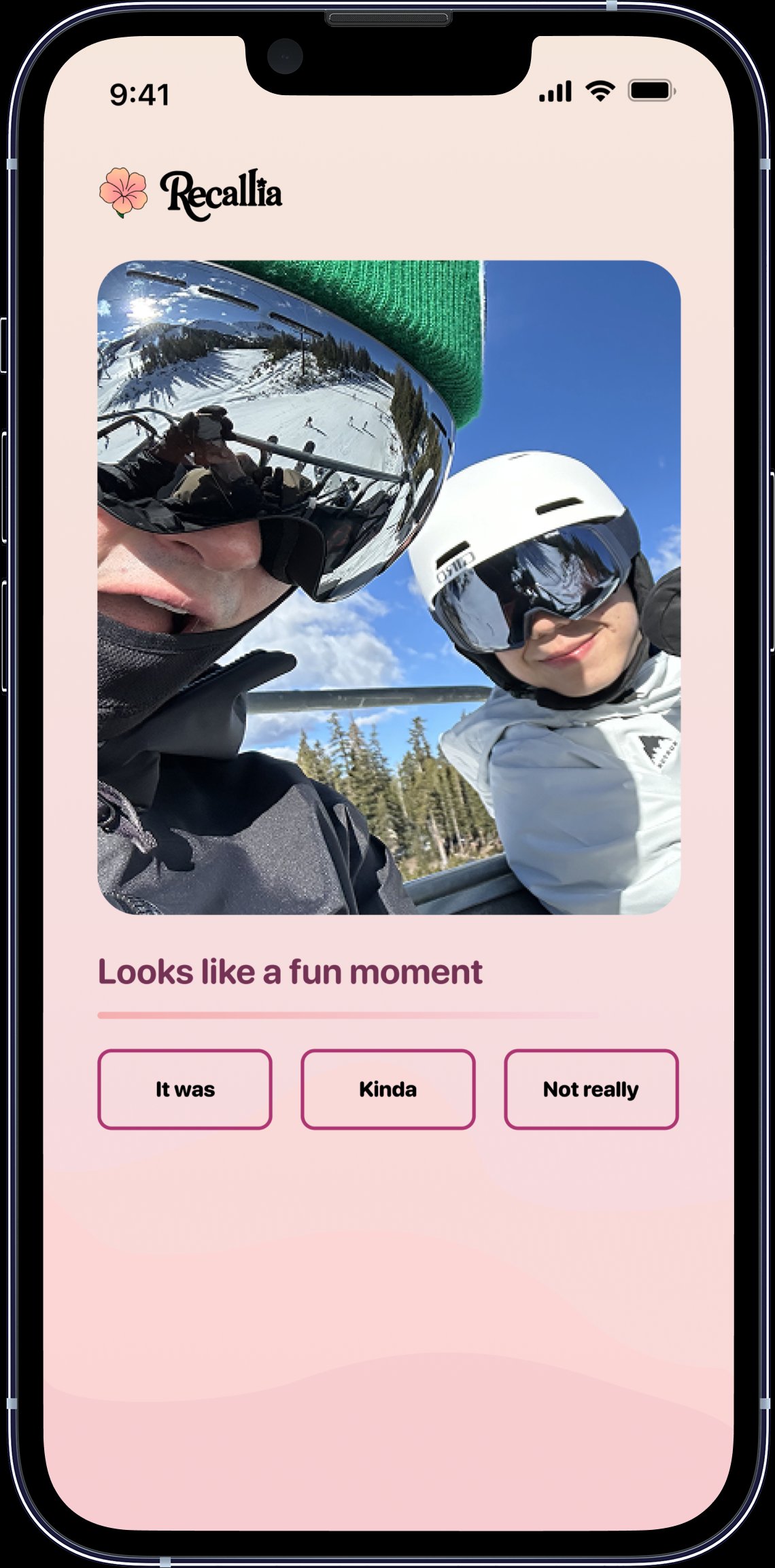
Notification → pick a photo → guided reaction → optional context → saved.

What you’re seeing
01
Notification nudge
Lock screen prompt while the feeling is still live. Curiosity over obligation.
02
Pick a moment
Select from camera roll. Privacy signal visible immediately.
03
Guided reaction
A statement is surfaced based on prior selections. One tap confirms or corrects.
04
Optional context
Add a sentence or skip it. The moment is valid either way.
05
Saved
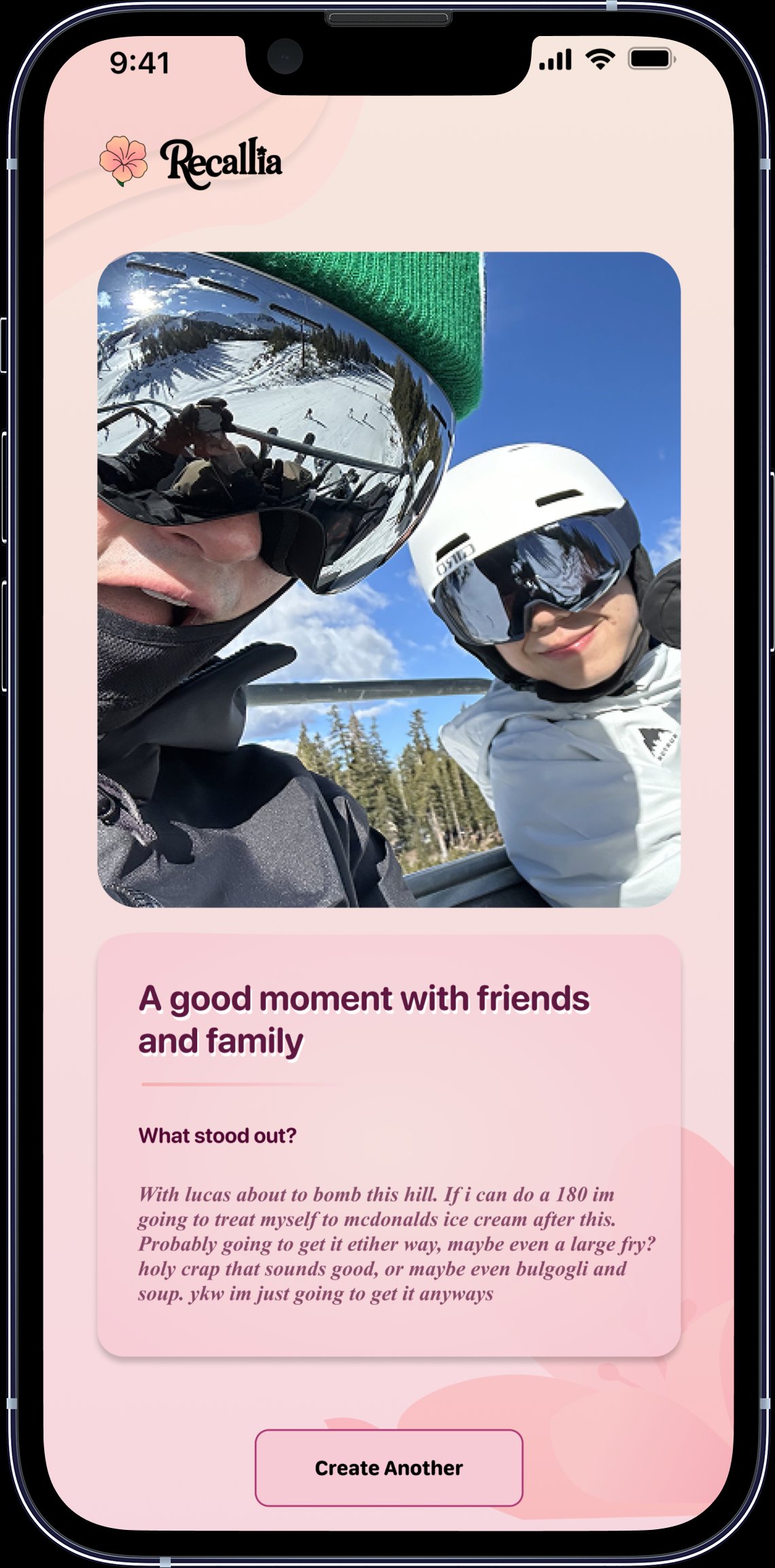
Confirmed in the user’s own words. The loop is complete.
03 — Research Snapshot

Tested in the wild. 20 participants. Zero onboarding.

We built an MVP web app and approached strangers in public with no prior explanation — no pitch, no context. We handed them a QR code and waited three seconds after they finished before saying anything. Two rounds of testing. The signal was clear: users were willing to reflect when the loop felt quick, private, and guided. Most still needed a clearer reason to return.

20
Participants
2
Testing rounds
40%
Strong emotional response
50%
Overall positive
Finding 01
Users wanted reflection. Not another daily habit.
The concept resonated immediately. The friction was the required behavior — not the goal.
Finding 02
Blank-page journaling caused abandonment.
Users swiped out of open-ended UI with no immediate payoff. A starting point changed everything.
Finding 03
Guided prompts unlocked natural reflection.
"Therapeutic," "meaningful," "alive" — said unprompted. One participant returned for three loops voluntarily.
Finding 04
The loop landed. The return trigger didn’t.
8 of 20 testers said unprompted: "I’d need reminders to come back." Capture worked. Re-engagement needed a system.
04 — Behavioral Strategy

Designing around existing behavior.

Most memory products ask users to build a new habit. "Open the app every day and journal" competes with rest, routine, and everything else — and loses almost every time. The problem isn’t motivation. It’s activation energy at the wrong moment.

Recallia stacks onto something that already happens: taking photos. A nudge surfaces while the context is still fresh — not hours later when the feeling has been replaced by whatever mood the user is in now. The product doesn’t ask users to remember to reflect. It meets them at the moment.

Dimension
Traditional Journaling
Recallia
Entry point
Open the app and start from nothing
A photo already taken — the entry point exists before the app opens
When it happens
End of day, after emotion has already faded
While the feeling is still live — not hours later
Activation energy
New habit required, competes with rest and routine
Stacks onto taking photos — a behavior that already exists
Cognitive load
"What do I write? How much? In what format?"
"Do I agree with this?" — reaction, not construction
Failure mode
Guilt for missed days, streaks broken, habit abandoned
No streaks — even light weeks produce something
05 — Key Product Decisions

Every decision traces back to one principle.

Reduce friction. Reflection without pressure. Capture context over content. If a decision couldn’t be justified by one of these, it was cut.

Photo-first capture
Reduces friction
Users already take photos daily. The entry point exists before the app opens.
Alternative considered
Text-first journaling. Voice memos. Open canvas.
Why this won
Every added step between moment and capture is a dropout point. Starting from an existing photo removes the highest abandonment risk.
Statement over blank field
Reflection without pressure
A pre-populated observation removes the hardest part: beginning. Disagreement is still engagement.
Alternative considered
Open text prompts. Structured question sequences. Required mood selection.
Why this won
Research confirmed users expand naturally once given a starting point. Reacting to a statement is a lower bar than generating one from nothing.
All context fields optional
Reflection without pressure
Required fields reframe reflection as homework. The floor matters more than the ceiling.
Alternative considered
Minimum character counts. Mandatory mood tags. Gated progression.
Why this won
A user who taps once still creates a structured memory. A user blocked by a required field creates nothing — and likely doesn’t return.
Privacy before commitment
Reflection without pressure
"100% Private — Nothing leaves your device" is the first copy users read.
Alternative considered
Social sharing. Public timelines. Collaborative memory.
Why this won
Testing showed writing felt "too sanitized" when users imagined a future audience. Private-by-default removed that anxiety entirely.
06 — Research → Decisions

How observations became product choices.

Each finding maps directly to a decision. Nothing in the flow was added without a behavioral reason to exist.
Finding
"By bedtime the emotion has already been replaced by how I feel now."
r/Journaling ↗
Decision
Notification fires while the feeling is still live — not at the end of the day.
Finding
"Writing felt like performing for a future audience — too sanitized."
r/Journaling ↗
Decision
"100% Private" is the first copy users read. Moments are framed as notes to self, not records.
Finding
"Even on days where nothing happened, once you start it just flows out."
r/Journaling ↗
Decision
Pre-populated framing removes the blank page. One statement is enough to unlock natural reflection.
Finding
Users swiped out of open-ended UI immediately — no payoff visible.
Round 1 field testing
Decision
Every screen has a visible next step. Forward momentum is never in question.
Finding
"I would need reminders to do it." — 8 of 20 testers, unprompted.
Round 2 field testing
Decision
Notification cadence is set during onboarding. The return trigger is built into the system, not left to the user.
Finding
One participant completed three loops voluntarily, noticing different prompts each time.
Strongest engagement observed
Decision
Keep the loop short and repeatable. Prompts vary by context so the experience doesn’t go stale.
07 — Final Screens

The capture loop, step by step.

The sequence is designed so reflection never feels like work. Each step removes one barrier before the next begins.

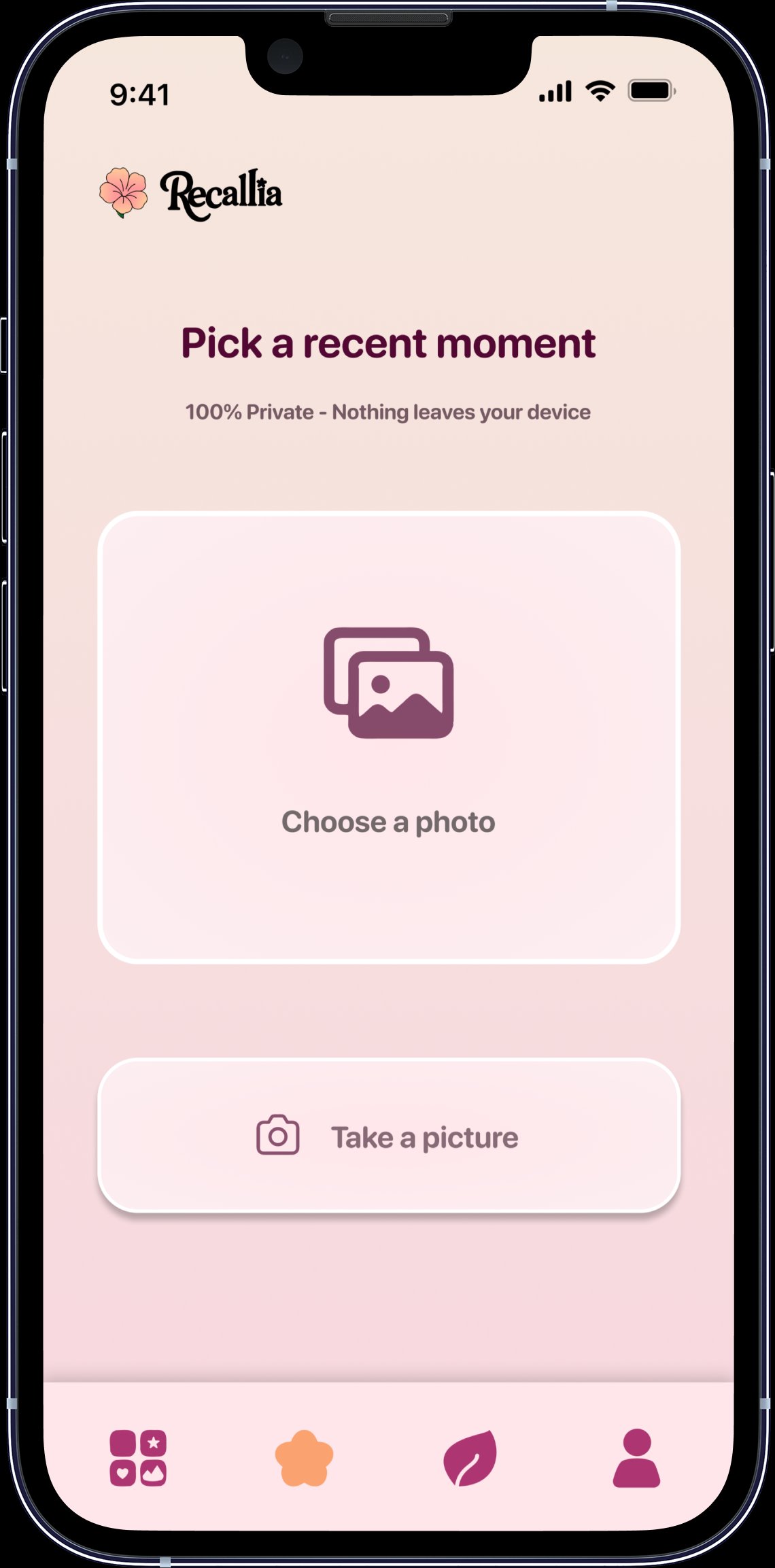
1Pick a Moment
Pick a Moment

Starting from existing photos removes the hardest step: figuring out where to begin. Trust is established before any commitment is asked.

2Reaction Before Reflection
Reaction Before Reflection

A statement is surfaced based on prior selections. One tap to agree or correct. People react faster than they write — so the system leads with reaction, not composition.

3Depth Without Pressure
Depth Without Pressure

Context is invited, never required. A short memory is better than no memory. The floor matters more than the ceiling.

4Memory Created
Memory Created

The user’s own words become the memory title. This moment enters the ecosystem — surfacing in the gallery, timeline, and Sunday Reveal. Capture is only the beginning.

Scroll to follow the loop
08 — Reflection

The problem wasn’t getting people to save more memories.
They were already doing that.

The problem was preserving context before it disappeared. A photo proves something happened. Context is what makes it worth returning to — and context has a half-life measured in hours, not days.

Testing on strangers with zero explanation produced "therapeutic" and "this makes it feel more alive" without prompting. The loop worked. The open question was always re-engagement — whether captured moments would pull people back on their own. That became the brief for Sunday Reveal.

Moment Creation is an exercise in minimum viable reflection. The behavior was already there. The product just needed to meet it at the right moment, with the lowest possible ask.

Module 03 — Weekly Reflection

Sunday Reveal

Sunday Reveal turns captured moments into a weekly reflection ritual. As users create moments throughout the week, the timeline slowly fills, building anticipation toward a personalized Sunday Letter. The system transforms scattered memories into a coherent story users have a reason to return to.

Return Loop Design AI Synthesis Anticipation Design Personalization Longitudinal Engagement
02 — Sunday Reveal Walkthrough

From moments to meaning, once a week.

Timeline growth → anticipation → Sunday unlock → personalized reflection.

What you’re seeing
01
Timeline growth
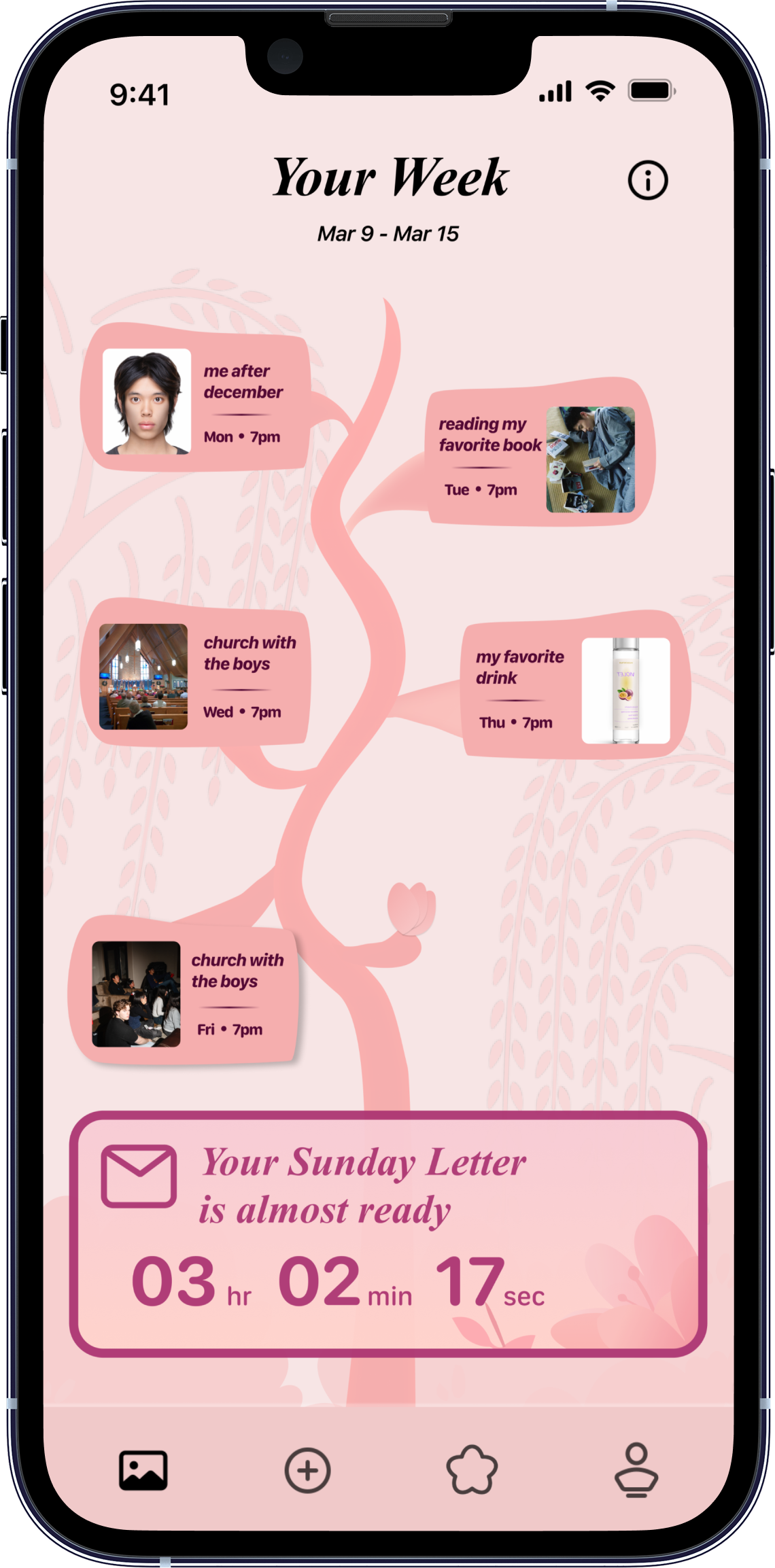
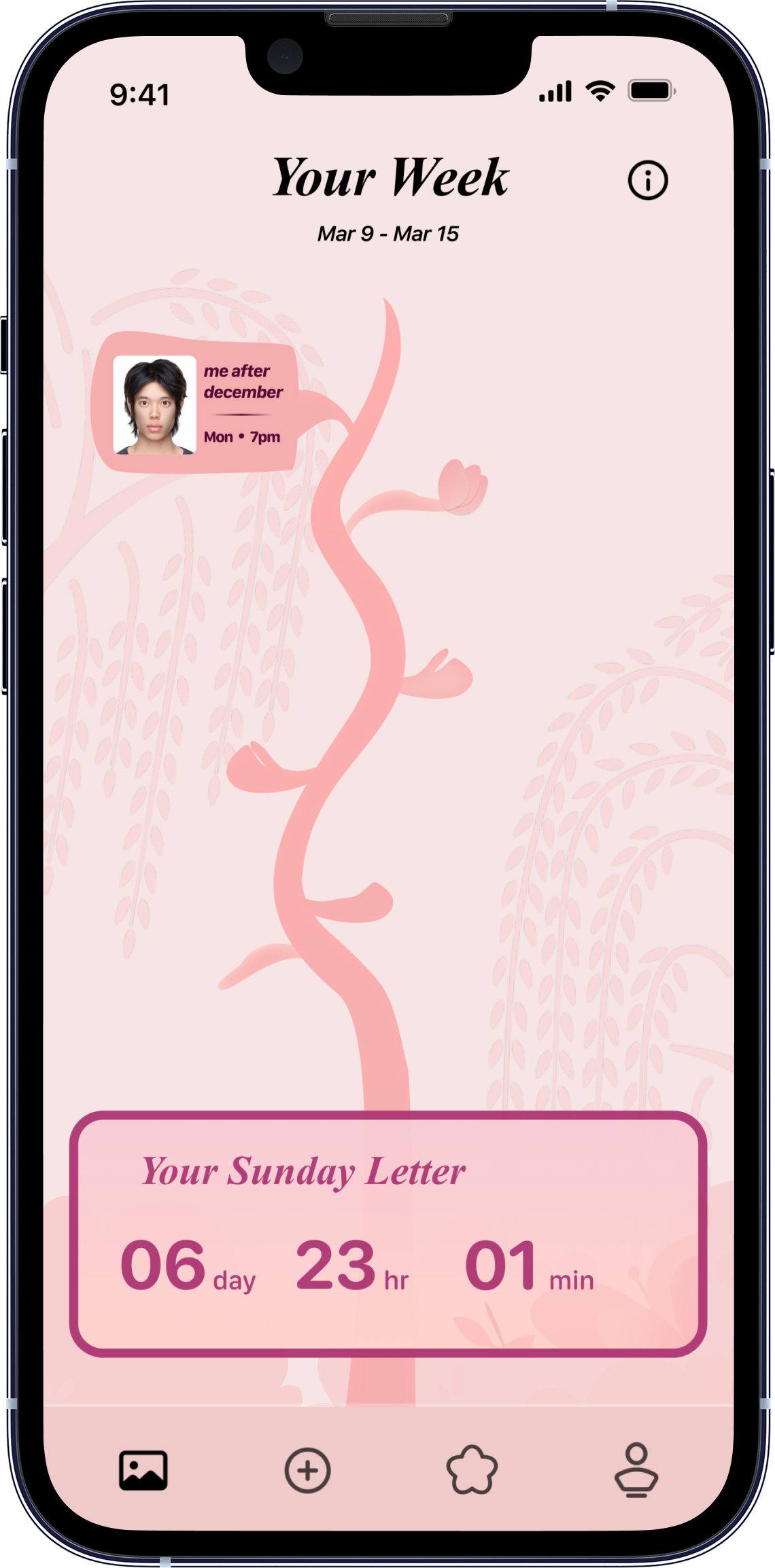
Moments surfaced throughout the week slowly populate the vine. Progress builds anticipation rather than pressure.
02
Countdown
The Sunday card changes as the week progresses, shifting attention toward the upcoming reflection.
03
Letter unlock
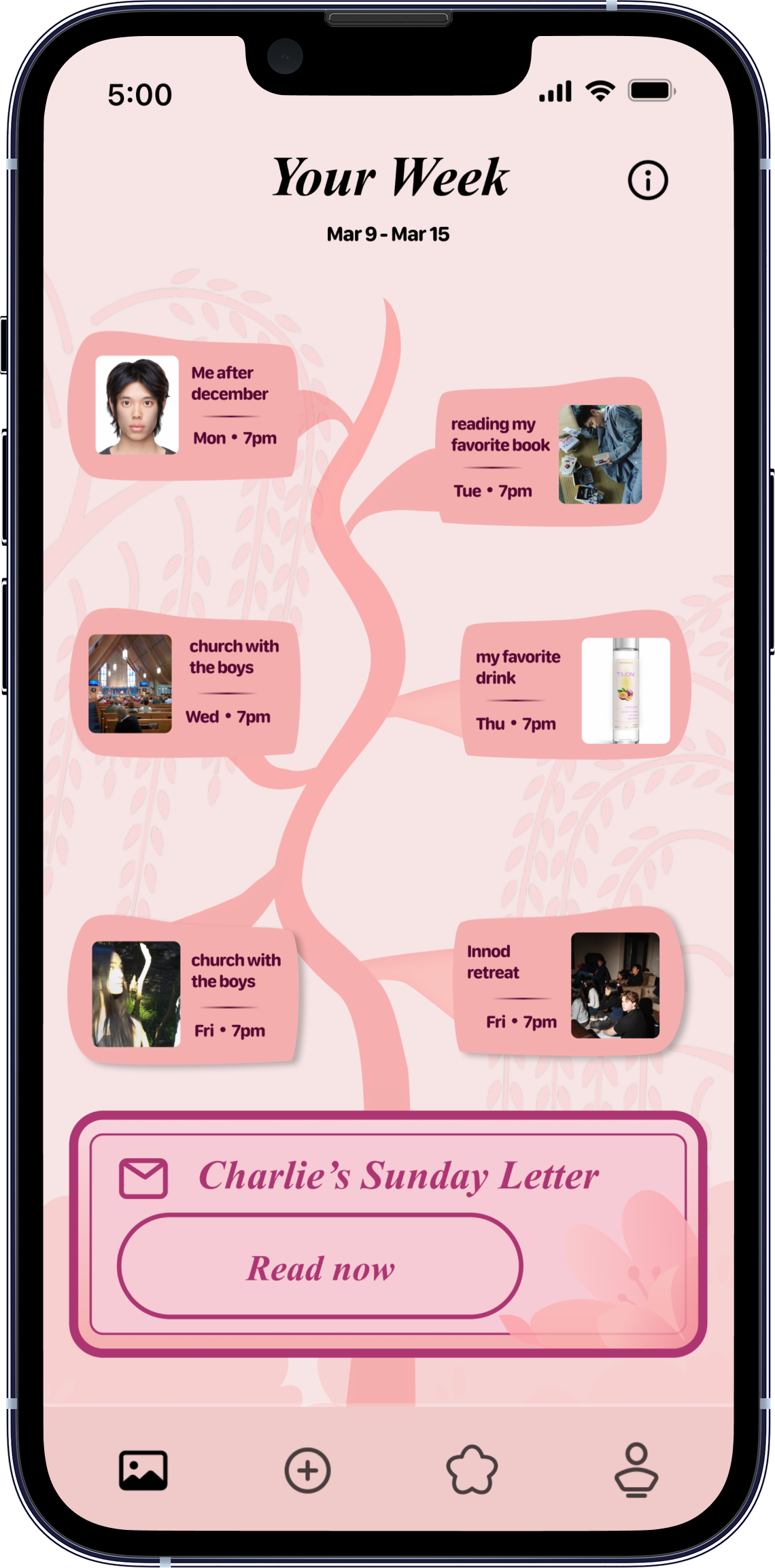
At 5 PM on Sunday, the experience transitions from collecting memories to revisiting them.
04
Opening ritual
An envelope interaction introduces the letter and turns reflection into an event rather than another screen.
05
Weekly reflection
Five pages transform scattered moments into a coherent story about the week.
Experience 01
Sunday Timeline

How do we make reflection something users look forward to?

01 — Problem

Reflection is delayed gratification.

Same starting point, two different systems. One fades by Wednesday. One compounds toward Sunday.

Without Timeline
Moment
Delayed value
No visible progress
Motivation fades
With Timeline
Moment
Visible growth
Anticipation
Sunday reward
Reflection
Repeat
↻ loops back to Moment
02 — Insight

Visual progress creates motivation.

Feedback doesn’t need to be numerical. It needs to feel alive — four sources, one direction.

Founder Observations
Direct observation during early testing.
Spotlight Event
Attendee reactions to the prototype.
UX Communities
A recurring theme across journaling & habit forums.
Finch Inspiration
Pet-growth mechanics as a reference point.
↘↓↓↙
The Insight — What All Four Pointed To

People don’t need productivity metrics. They need something to look forward to.

03 — Design Principles

Designing for anticipation, not obligation.

One operating principle. Five rules that protect it.

ANTICIPATION > OBLIGATION
No streaks
no guilt for gaps
Visible progress
small changes, felt
Never punish
missed days cost nothing
No empty placeholders
never reads as incomplete
Natural cultivation
grown, not collected
04 — Retention Signals

Directional signal from early testers, not a study.

Founder-led testing — directional, not formal research
18
Early testers exposed
72%
Noticed growth immediately
8/10
Checked the timeline before creating another moment
Engagement Across the Week
Mon
●●
Tue
●●●
Wed
●●●●
Thu
●●●●●
Fri
●●●●●●
Sat
Sun
“I wanted to see what Sunday looked like.”
Founder testing — returning tester
05 — Goal-Gradient Effect

People work harder the closer they get to the reward.

Mon Tue Wed Thu Fri Sat Sun

Same behavior, just visible. Sunday Timeline doesn’t manufacture urgency — it surfaces the curve that was already there.

06 — System Loop

Not a journey map. A loop that compounds.

Six stages, no exit. Memory Value feeds directly back into the next Moment Creation.
Each pass adds to the last.
01
Moment Creation
02
Timeline Growth
03
Anticipation
04
Sunday Unlock
05
Reflection
06
Memory Value
07 — Timeline Evolution

The same screen, three moments in its life.

The vine grows in one place all week. What changes is how full it is — and whether the letter is waiting or ready.

1Early Week
Sunday Timeline — Early Week, one moment captured, vine nearly empty

The timeline begins nearly empty. Users are never pressured to fill every branch.

2Midweek
Sunday Timeline — Midweek, five moments populating the vine, countdown running

Selected moments slowly populate the vine. Attention shifts from individual memories toward the upcoming reveal.

3Sunday 5PM
Sunday Timeline — Sunday 5PM, letter unlocked and ready to open

Growth stops and the letter becomes available. The timeline’s purpose is anticipation, not completion.

08 — Constraints

Six memories, a countdown, and a reveal card. One screen, no scroll.

This screen was harder to design than it looks. A title, six memory cards, a countdown, and the Sunday reveal card all needed to fit on one screen — without scrolling. Multiple layouts were explored before arriving at the current composition.
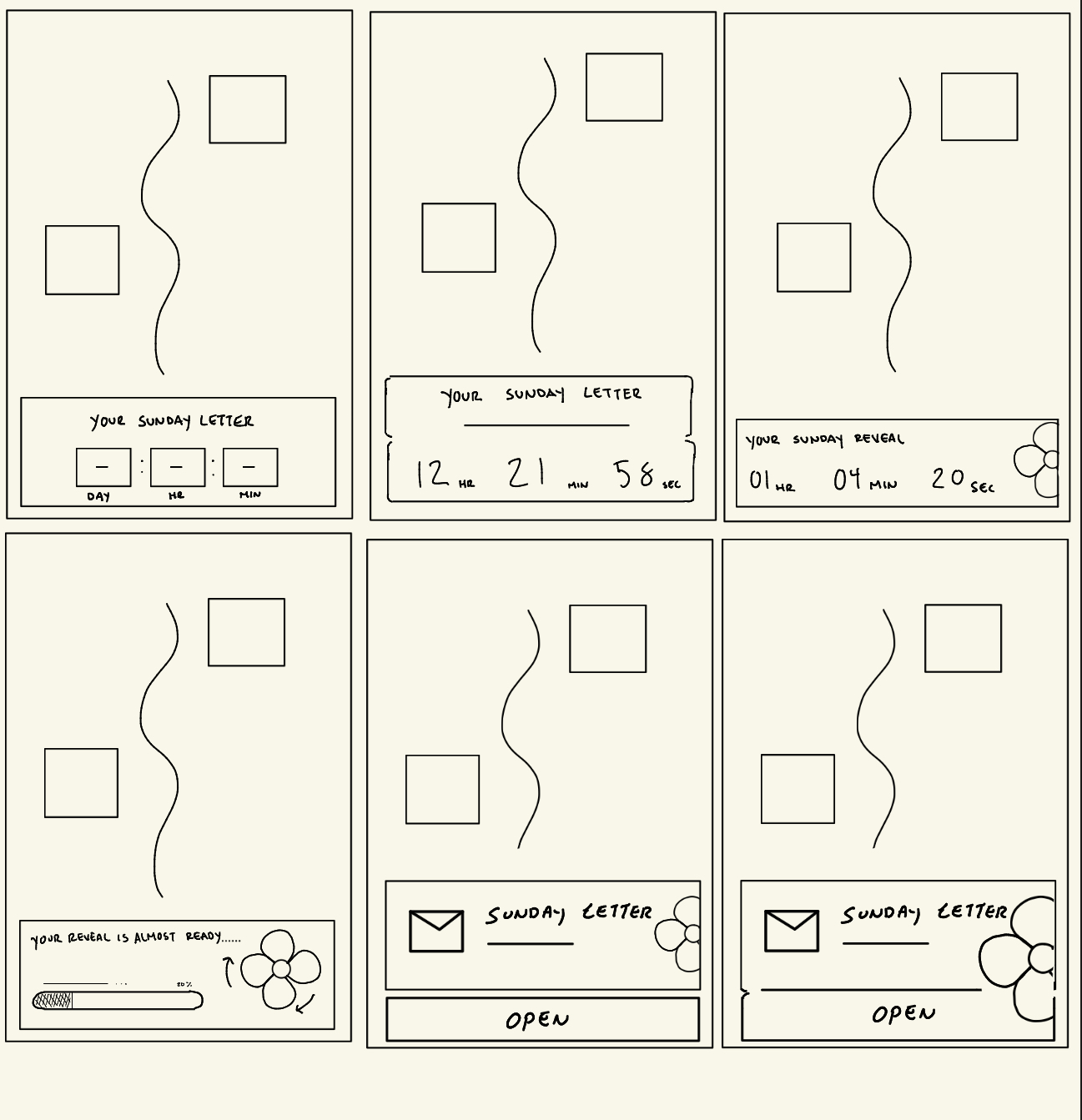
Sunday Timeline lo-fi — six countdown formats
Lo-fi — six ways to format the countdown
Day/hour/minute counters, bracketed timers, a progress bar, two ‘ready to open’ treatments. Each explored how much urgency the reveal card should communicate without tipping into pressure.
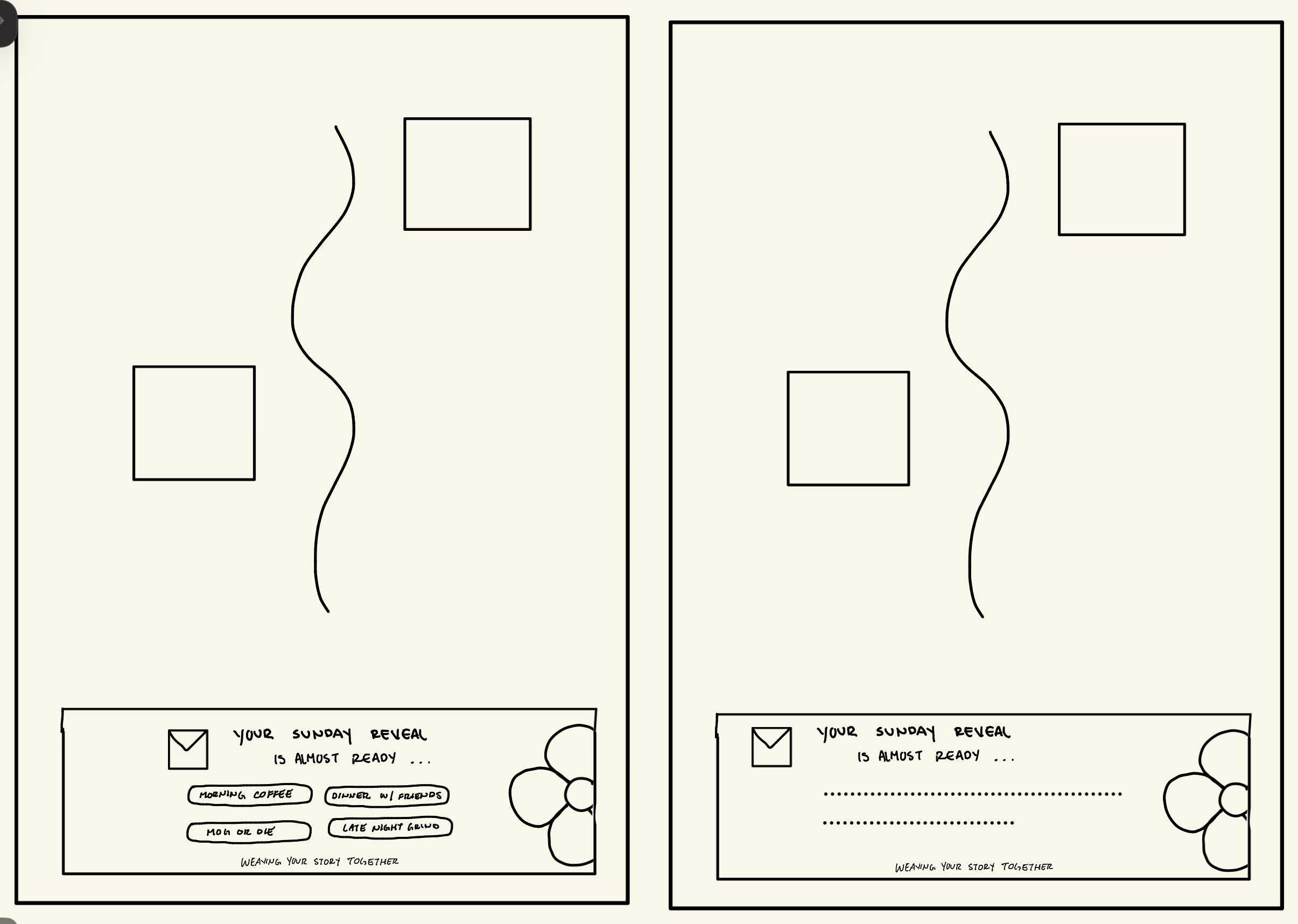
Sunday Timeline lo-fi — how much to reveal before Sunday
Lo-fi — how much to reveal before Sunday
Left surfaces moment tags — a preview of what’s been captured. Right keeps it blurred, withholding everything until the reveal. Both test the same question: how much should the system show before the reward arrives?
The Real Constraint

The challenge wasn’t adding elements. It was deciding what deserved space.

09 — Reflection

Sunday Timeline wasn’t designed to archive memories.

It was designed to make meaning visible before the reward arrives. Instead of asking users to remember why they should come back, the product gives them something to anticipate.

Experience 02
Sunday Letter

Once someone returns, how do we make the reward feel meaningful?

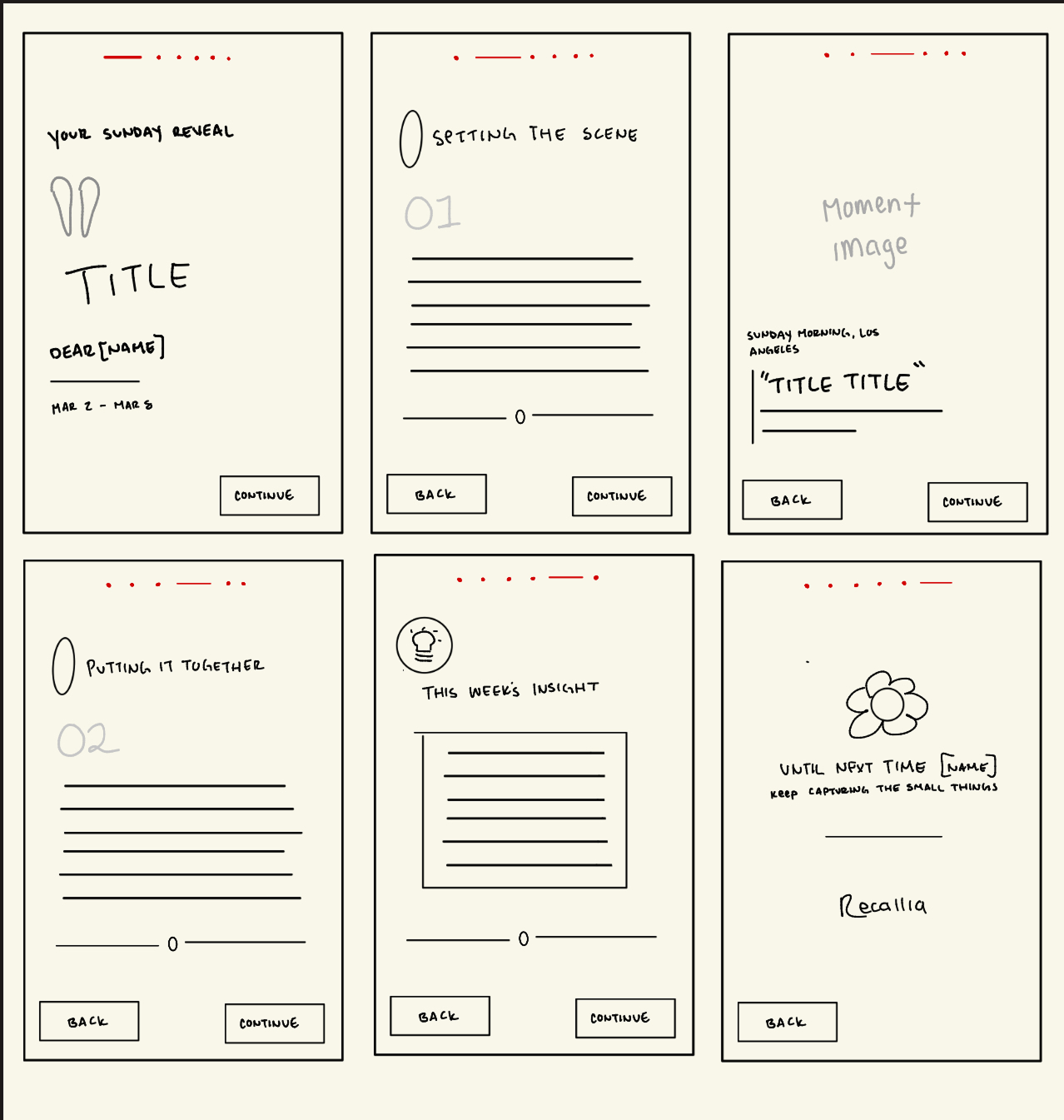
What you’re seeing
01
Opening Ritual
The envelope appears and unfolds into the week’s story. A little ceremony before reflection begins.
02
Your Week
AI titles the week based on patterns across moments. Curiosity before meaning.
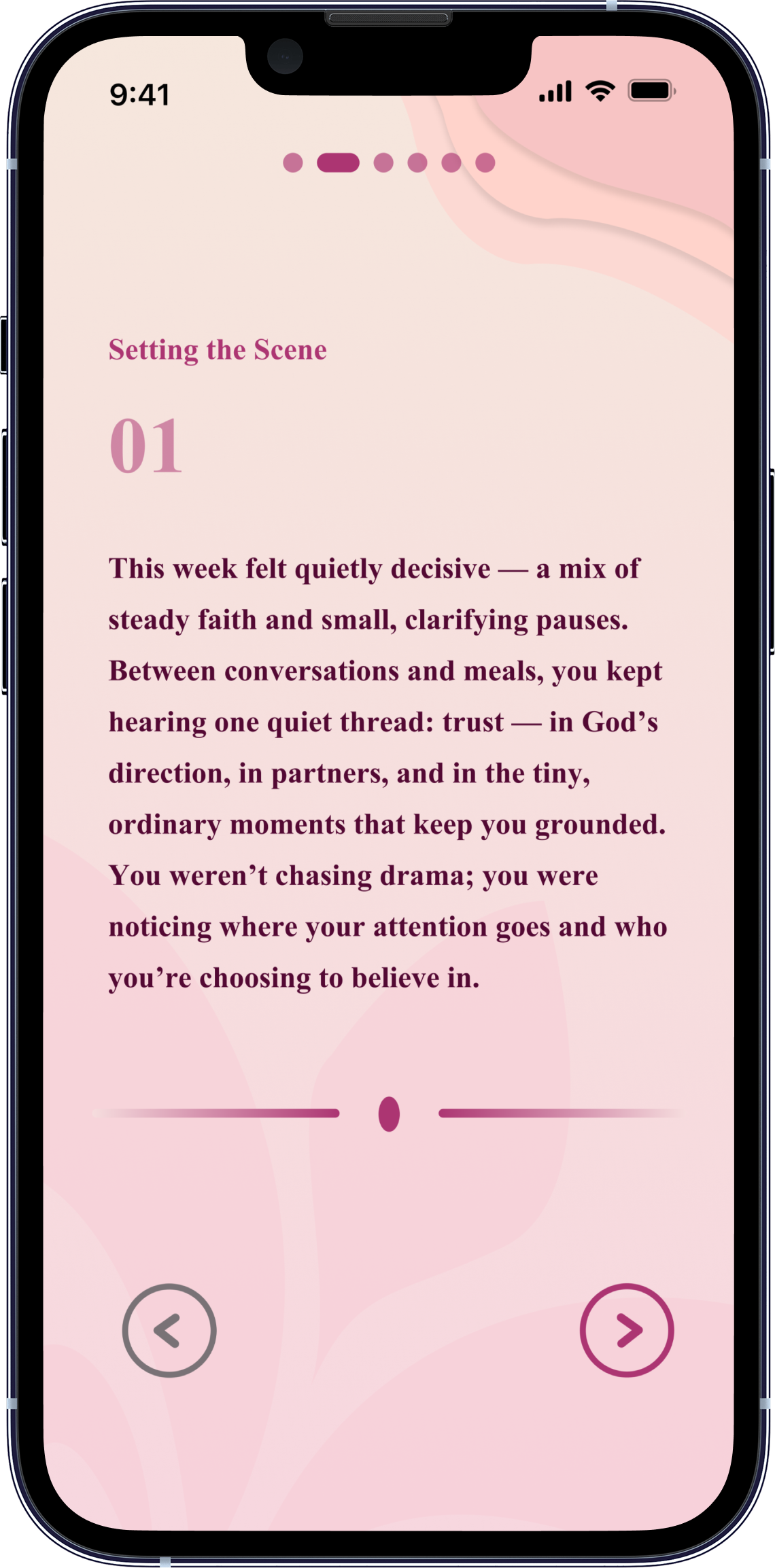
03
Setting the Scene
The emotional tone of the week is summarized. Optimistic without forcing significance.
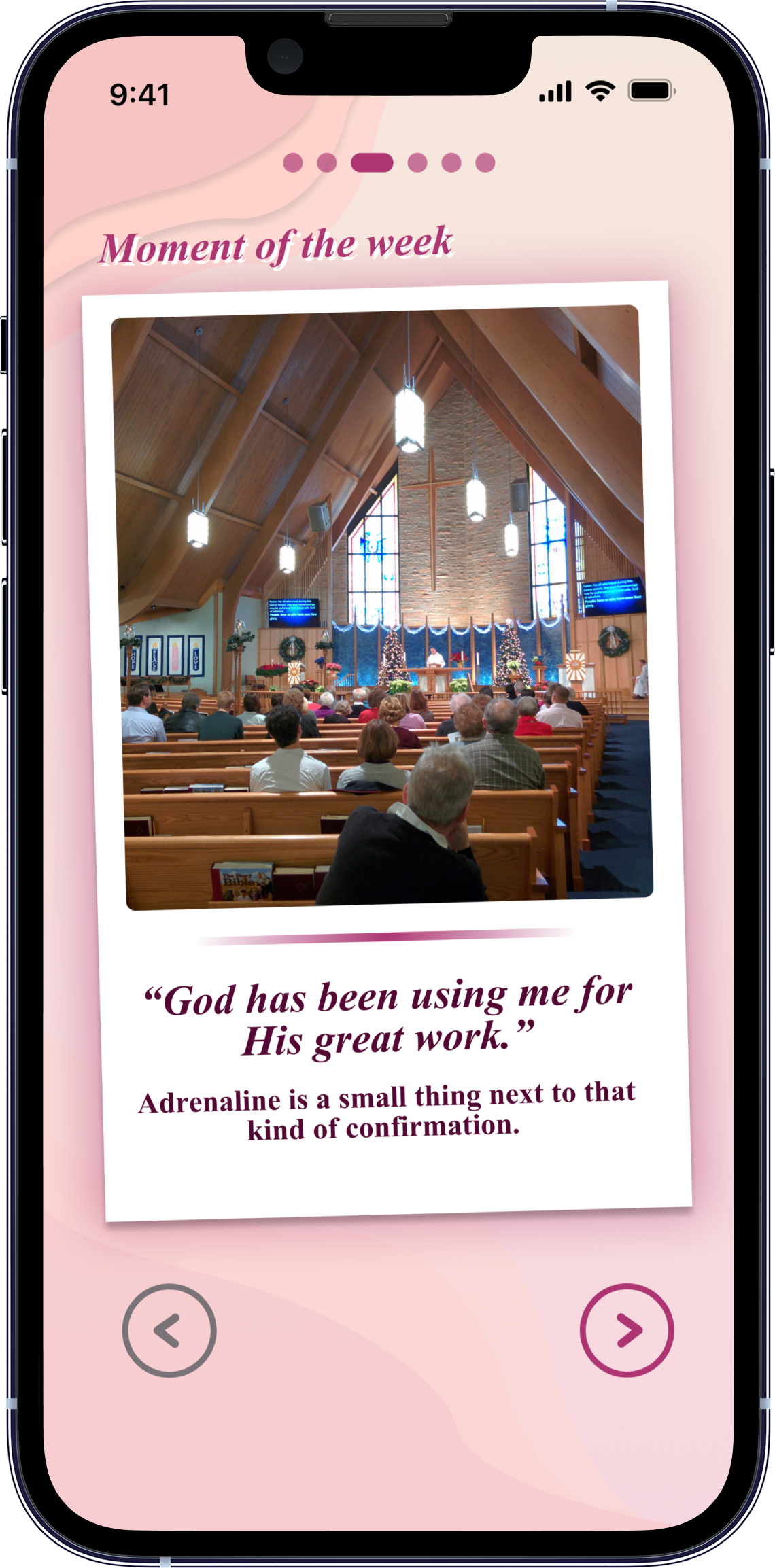
04
Moment of the Week
One memory becomes the centerpiece. Quotes and details are surfaced when they matter.
05
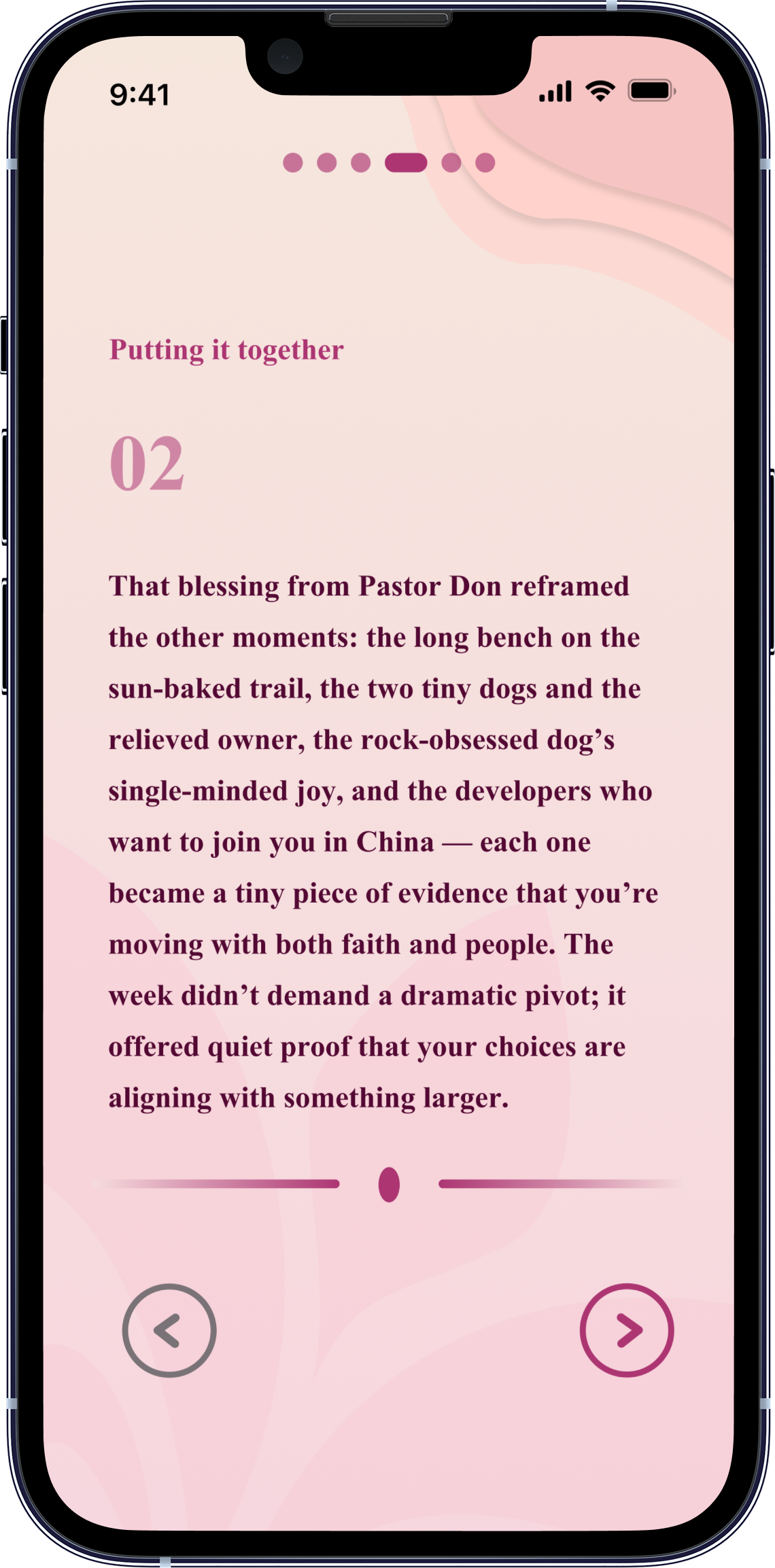
Putting It Together
The rest of the week is woven into a narrative. The letter ends with closure, not conclusions.
09 — Problem

Reflection isn’t automatic.

What usually happens
PhotosArchive
JournalsForgotten
MemoriesDecay
What we know
Memories matter.
Revisiting rarely happens.
Value arrives later.

Memories don’t become meaningful because they’re stored. They become meaningful when they’re revisited.

10 — Opening Ritual

The goal wasn’t efficiency. It was ceremony.

Opening the letter should feel like opening mail — not loading a screen.

Countdown Ends
The card that waited all week is finally tappable.
Envelope Appears
A physical metaphor, not a loading state.
Envelope Animation
Long enough to register, short enough to never feel slow.
Letter Unfolds
The way a real letter would — not all at once.
Reading Begins
A sequence to move through, not a feed to scroll past.

Friction wasn’t removed here. Tiny moments of slowness were preserved on purpose — rituals are remembered, instant content isn’t.

11 — Letter Architecture

Five pages. Each one earns the next.

Information architecture, not layout — what each page is for, what it’s trying to make the reader feel, and what it’s built from.

PAGE 01
Your Week
Purpose — Set tone.
Goal — Curiosity.
Input — Weekly moments.
PAGE 02
Setting the Scene
Purpose — Summarize the energy.
Goal — Recognition.
Input — Moment context, tone.
PAGE 03
Moment of the Week
Purpose — Create a centerpiece.
Goal — Nostalgia.
Input — Hero image, quotes.
PAGE 04
Putting It Together
Purpose — Connect moments.
Goal — Meaning.
Input — Entire week.
PAGE 05
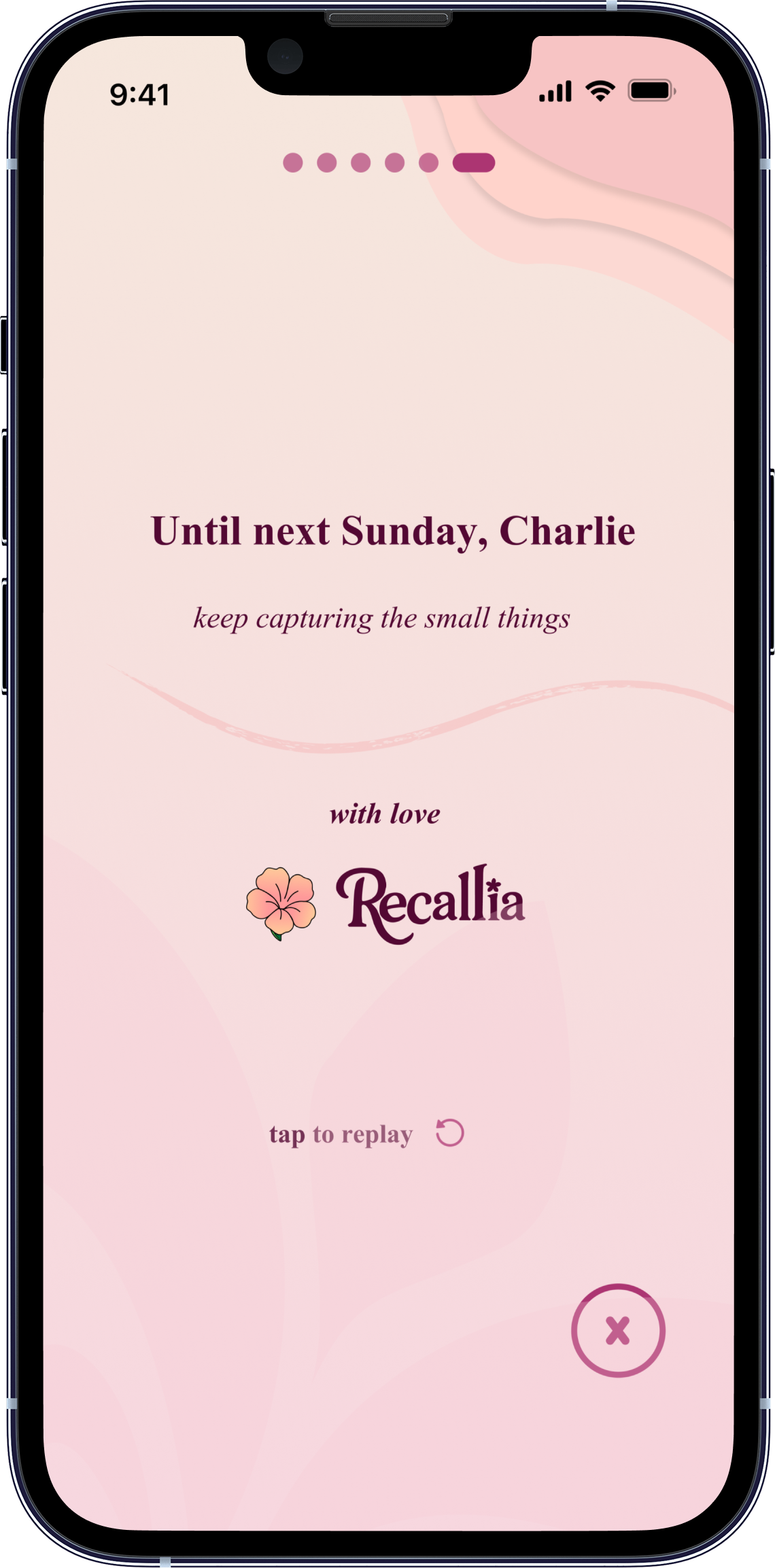
Signing Off
Purpose — Closure.
Goal — Warmth.
Input — Overall narrative.
12 — AI Synthesis System

Orchestration, not generation.

Five pages of the Sunday Letter are assembled from a fixed pipeline — not a single prompt asked to improvise.

Input
Weekly Moments
Photo Analysis
Tags People Feelings Activities Captions
Orchestration
Context Assembly
Prompt Structure
Tone Selection
Narrative Assembly
Output
Five-Page Letter
Funny Serious Quiet Celebratory

AI doesn’t invent meaning here. It synthesizes existing context — the system adapts tone instead of manufacturing depth.

Funny week — playful tone
“Surviving Group Project Hell”
This week had main character energy — three deadlines, one all-nighter, and a group chat that never slept.
Serious week — reflective tone
“The Week That Asked for Patience”
This week moved slower than usual — long pauses, harder conversations. Nothing was urgent. Everything still mattered.
13 — Personalization

No two letters should feel identical.

The same six inputs shape six different decisions in how the letter gets written.

Inputs
Photo Caption People Activities Emotions Intensity
Influences
Title Writing style Hero moment Quotes Order Tone
Unique
Sunday Letter
Five weeks, five different letters
“Destroying Midterms” “Comfort in Tennis” “The Week I Needed” “Small Wins” “The Long Weekend”

The goal isn’t perfect accuracy. It’s recognition — the reader thinking “this sounds like my week,” not auditing it for facts.

14 — Design Evolution

Finding the right medium.

Three explorations, each closer to the final feeling than the last.
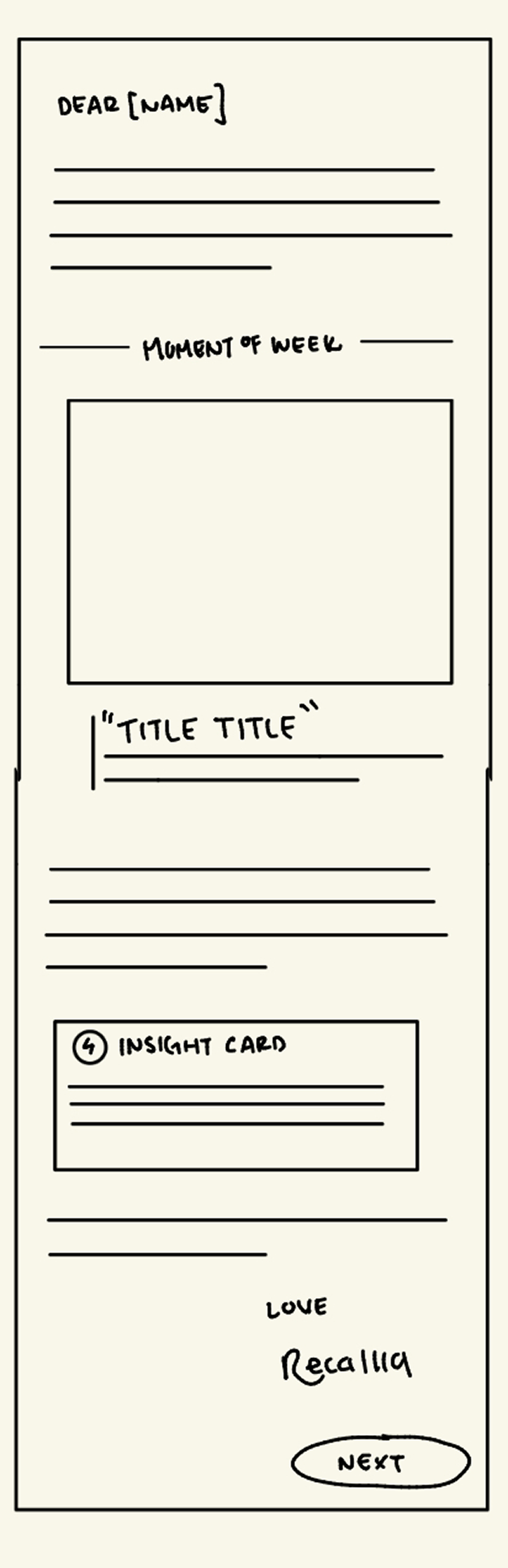
V1 — single page, one continuous scroll
V1 — Single Page
One long scroll. Everything on a single page.
V2 — single page, refined inside a phone frame
V2 — Refined
Same scroll idea, tightened inside a real frame.
V3 — letter system, final paginated direction, won
V3 — Letter System — Won
Broken into discrete pages with Back/Continue — a sequence to move through, not a feed to scroll past.
Why It Won
  • Books, newspapers, and handwritten letters inspired the final direction.
  • Large typography and dividers created rhythm and breathing room.
  • Pink and deep purple were chosen intentionally to evoke warmth and calm.
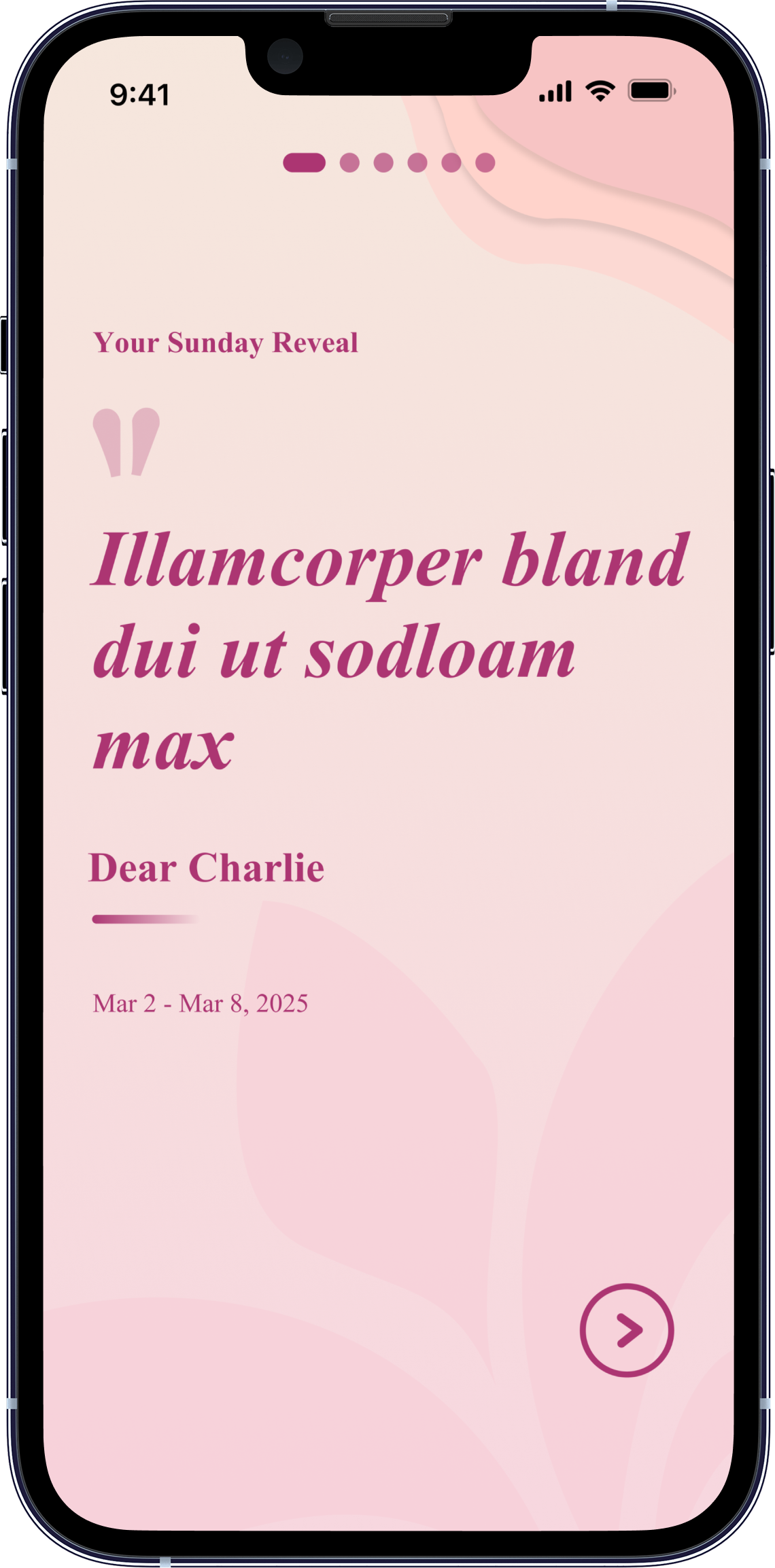
15 — Final Screens

Five pages, read in order.

Editorial spreads, not dashboard screens — meant to be read, not scanned.

Sunday Letter — Your Week, cover page
Page 01 — Your Week

AI titles the week and establishes tone.

Sunday Letter — Setting the Scene
Page 02 — Setting the Scene

Summarizes the emotional energy of the week.

Sunday Letter — Moment of the Week
Page 03 — Moment of the Week

The hero memory becomes the center of the story. A quote surfaces if one exists.

Sunday Letter — Putting It Together
Page 04 — Putting It Together

Smaller moments become a narrative.

Sunday Letter — Signing Off
Page 05 — Signing Off

Provides closure rather than conclusions.

16 — What This Changed

Designing meaning taught me more than designing AI.

Before
I thought AI quality mattered most.
After
Structure mattered more than generation.
Realization
People don’t remember outputs. They remember rituals.

The most meaningful products don’t create memories.
They create reasons to revisit them.

Module 01

Road to MVP

Building a product meant designing more than screens.

Business Thinking Execution Validation Product Evolution
01 — Timeline

From an idea between friends to a shipped product.

Recallia started on May 1, 2025. Five months later, Joshua Jenkins and I launched on the App Store.

May 1, 2025
Beginning
Joshua Jenkins and I started Recallia after realizing we wanted a more spontaneous way to capture and reflect on life.
June 2025
Early Prototypes
Built and tested multiple versions centered around moments, reflection, and lightweight journaling.
July 2025
User Conversations
Shared concepts with friends and people of different ages. Strong initial validation, but low retention revealed deeper problems.
August 2025
First Pivot
Realized features weren’t the problem. Human behavior was.
September 2025
Sunday Reveal System
Designed the gamified weekly loop that connected capturing moments with reflection.
October 22, 2025
App Store Launch
Shipped Recallia to iOS.
~100 USERS MULTIPLE ITERATIONS STILL LEARNING
02 — Why Build Recallia

People wanted to remember more. Journaling made that feel like work.

Recallia started with a simple observation: people want to remember their lives more intentionally, but the tools for doing that feel like homework. Journaling asks for a discipline most people don’t have on a given Tuesday night. Photos pile up by the thousands and get revisited by almost no one.

Charlie Wang and Joshua Jenkins had been friends for over a decade — through Berkeley, USC, and the years between — before either of them thought of Recallia as more than a shared curiosity. Started in May 2025, it began less as a startup idea and more as a question two friends kept circling back to: why does something almost everyone says they value get abandoned so easily?

The early hypothesis was narrow on purpose. If capturing a moment could happen in the same instant someone was already taking a photo, reflection might not need its own habit — just a lower bar to clear.

Mission

Recallia helps people capture and reflect on moments in a way that’s effortless, fun, and rewarding.

Vision

Recallia envisions a world where everyday moments, big or small, are captured so people never forget the feelings, insights, and experiences that shape who they are.

Neither was a guarantee. Both were a direction worth testing.

03 — Early Experiments

What people say and what people do are different signals.

The first version of Recallia was built on one assumption: if capturing a moment was easy enough, people would do it. Reduce the friction, and the habit takes care of itself.

In conversations, that assumption held up well. People nodded. People said they wanted exactly this — a way to hold onto the small stuff before it disappeared. It was easy to mistake that enthusiasm for validation.

Behavior said something else. Users downloaded the app, created a handful of moments in the first sitting, and quietly stopped. Not because anything broke — because nothing was pulling them back. What people say in an interview and what they actually do a week later turned out not to be the same signal, and the gap between them was where the real product question lived.

A few problems surfaced once we looked past the interviews: Recallia was hard to explain in one sentence, it didn’t sit cleanly in a category people already understood, and there was no mechanism creating a habit — capture depended entirely on a user’s own discipline, in a category already crowded with apps asking for exactly that.

04 — Events & User Feedback

We stopped explaining Recallia and started watching people use it.
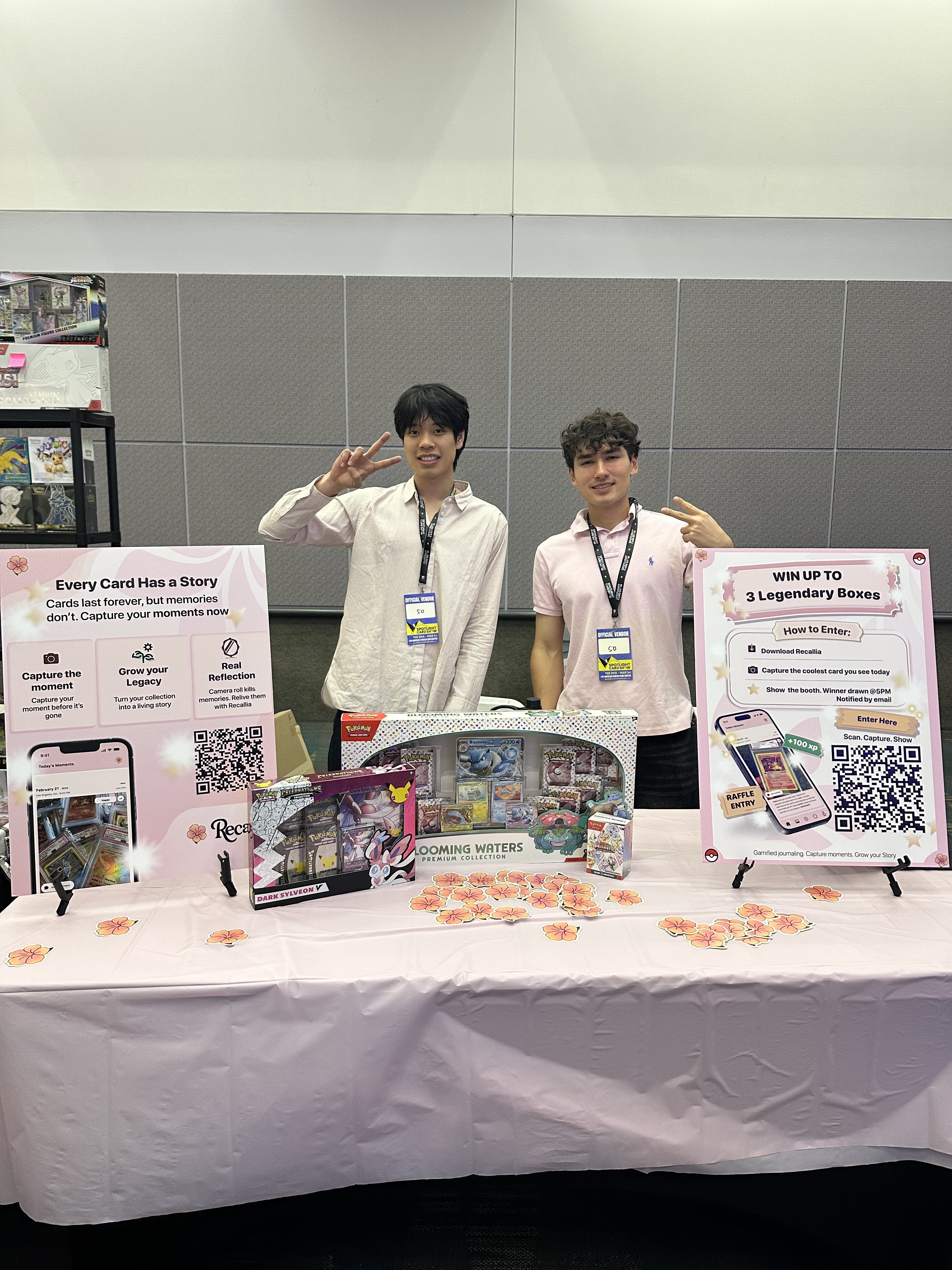
At the booth — Spotlight Card Show

No download, no account — just a QR code and thirty seconds with a stranger. We said as little as possible going in. We cared more about what someone’s face did than what they told us afterward.

What we heard — unprompted, in the moment

“This is cute.”

“I love the animation.”

“It’s surprisingly intuitive.”

“I usually journal at night, but journaling throughout the day feels different.”

“It makes memories feel more intentional.”

“It feels therapeutic.”

Signals, not testimonials — read for pattern, not praise.

Questions we heard, just as often

“When would I use this?”

“How do I remember to do it?”

“What makes this different from photos?”

A strong reaction in the moment, and no evidence yet of a reason to come back. That distinction — not the praise, not the confusion alone — became the question the rest of the product had to answer.

05 — Product Evolution

The reward can’t be the reason someone captures a moment.

The original loop was simple: capture a moment, save it. It made sense on a whiteboard and fell apart in practice. Capturing took effort, and saving gave nothing back. There was no transformation between the two — no sense that the moment had become something more than a record. Without that, there was nothing to close the loop, and nothing to make someone want to open the app again.

The first realization was that reflection wasn’t a feature people were missing. It was already something they wanted — they just didn’t want the effort traditionally attached to it. People weren’t rejecting journaling because the idea was bad. They were rejecting the work.

The second was that a photo alone couldn’t carry that weight. A photo proves something happened. It doesn’t say why it mattered, and without that, there was nothing for the system to reflect back.

The realization that reordered everything was about sequence, not features: the reward couldn’t be the reason someone captured a moment, or capture would feel like a transaction. The reward had to arrive later, separated from the effort, so it could feel like a gift instead of a receipt. That’s the realization Sunday Reveal came from — not a feature to add, but the answer to where the missing payoff in the loop needed to live.

06 — Marketing & Growth

Every card has a story.

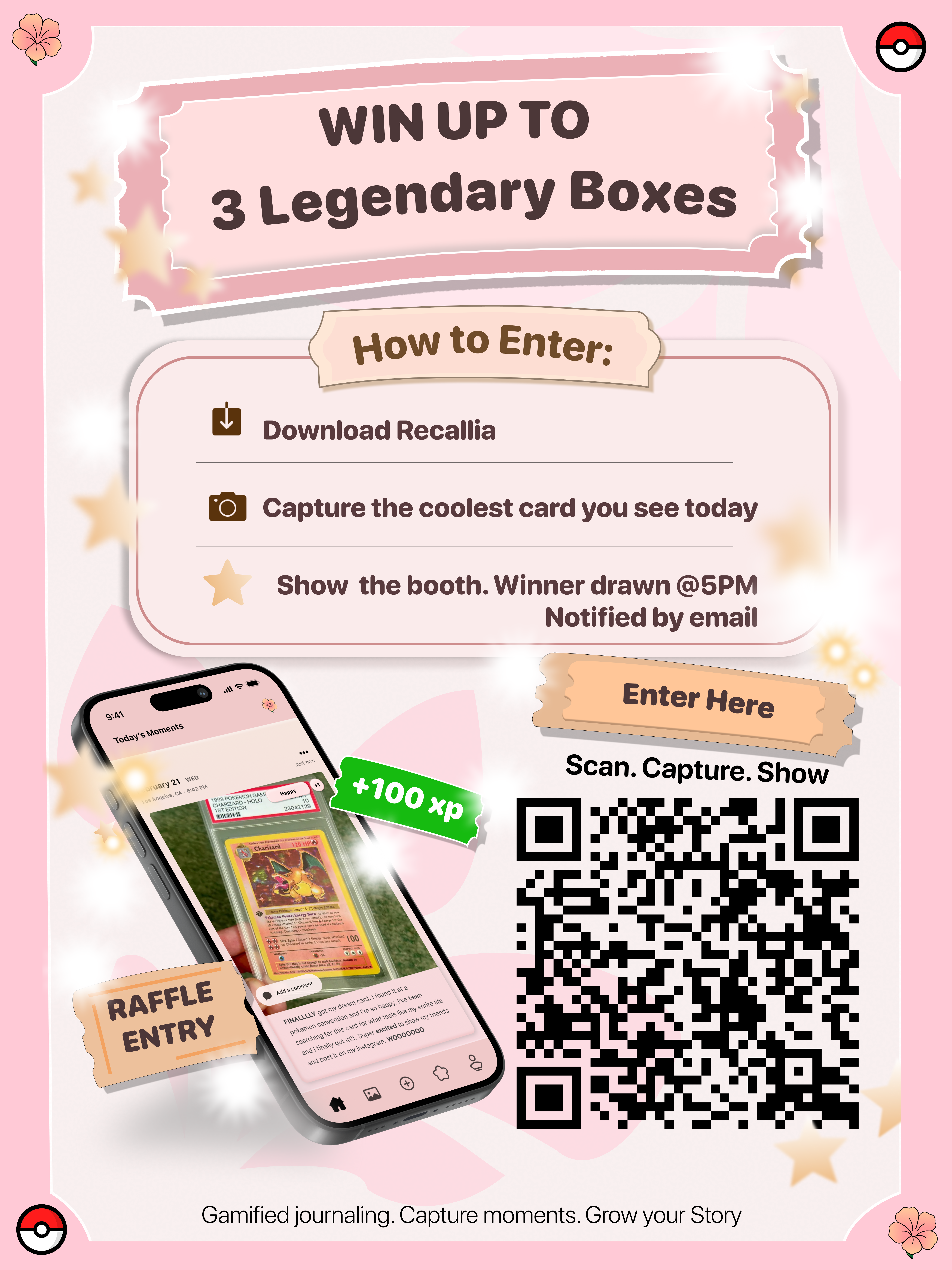
Marketing, for us, was curiosity first: where do memories already matter to people, in a way we could learn from? One answer was a trading card show — collectors already understand that a card’s value is rarely about the card. It’s the memory attached to it.
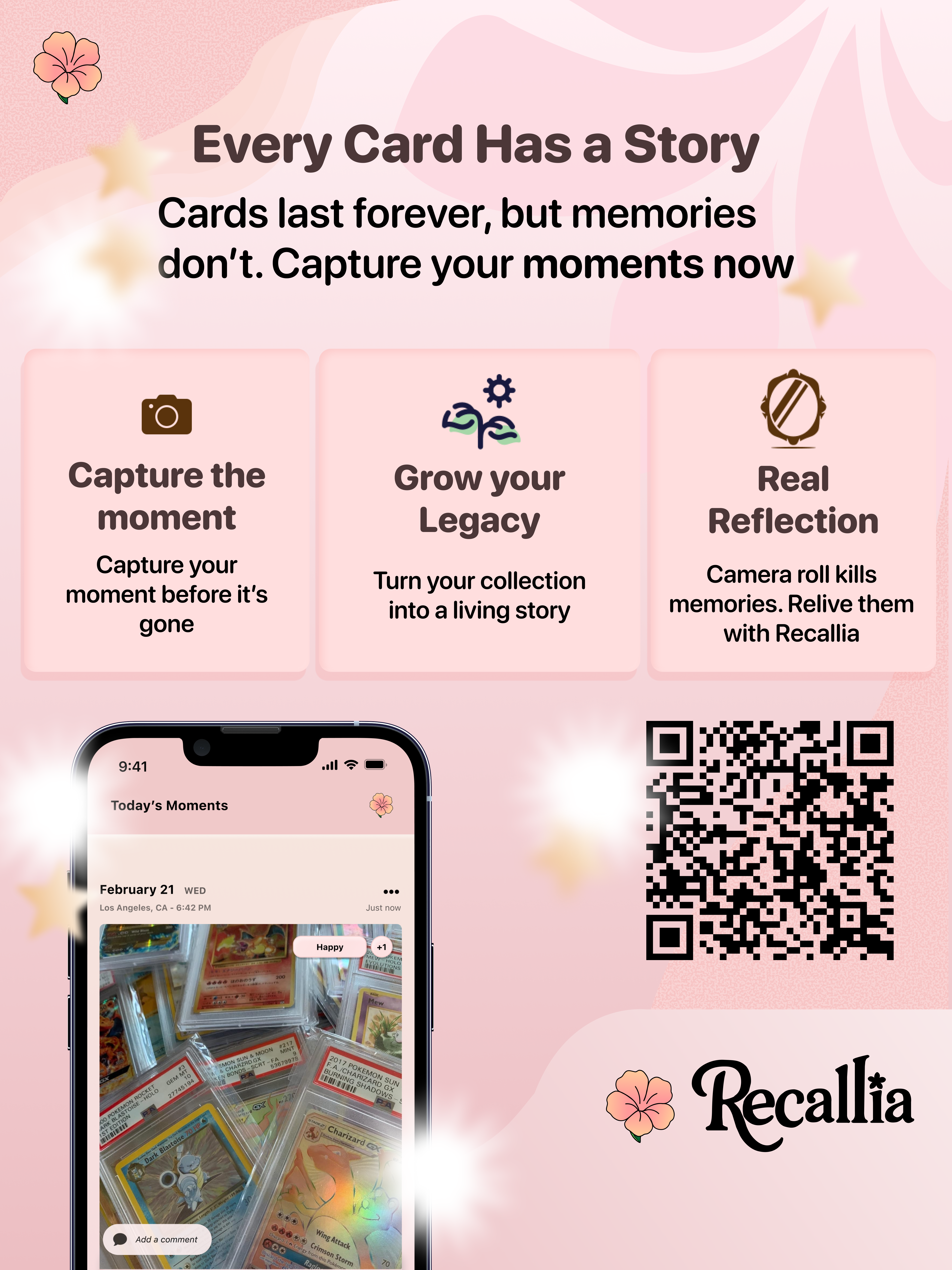
Poster
Spotlight Event
Conversations
Downloads
User Interviews
Every Card Has a Story — Spotlight Card Show campaign poster
The line that carried the booth
Spotlight Card Show raffle poster — entry mechanic
The raffle — reason enough to stop walking

The booth stayed deliberately small: a raffle to get people to stop, a QR code to skip the download, and someone walking each person through it live instead of handing over a phone and stepping back. The reactions echoed what we’d already heard — warmth, and the same unanswered question of when someone would use it on their own. Two different rooms, the same open question.
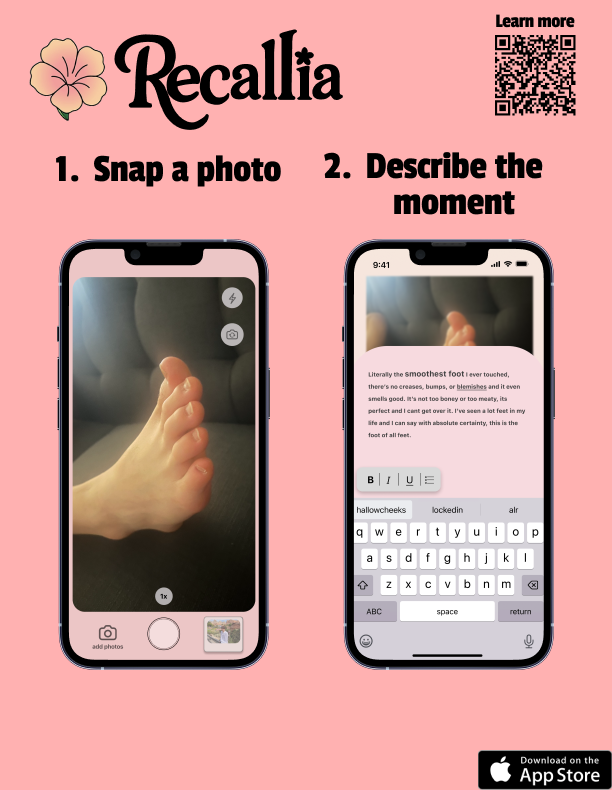
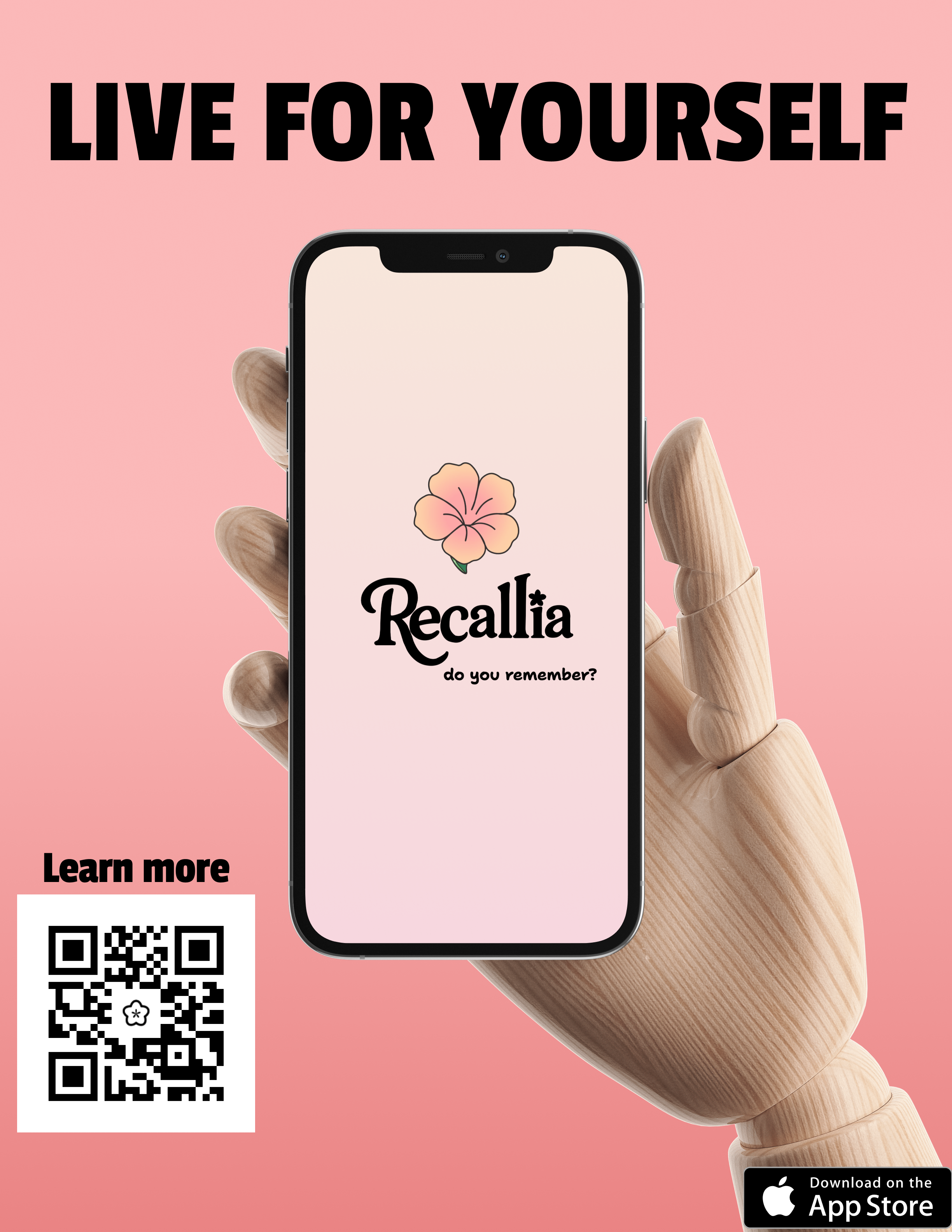
Recallia existed outside Figma, too
USC Berkeley — posters went up at both, by hand.
Recallia campus poster — how it works
Recallia campus poster — Live for Yourself
07 — Building the MVP

Shipping was permission to start learning, not a finish line.

We avoided accounts, downloads, and onboarding for as long as we could. Each one adds a step between an idea and finding out if it’s true — and a QR code can test a concept on a stranger faster than an app store listing ever could.

May 1, 2025
Initial Idea
Two friends, one shared question. No product yet.
 
Early Prototype
Built to be thrown away — just enough to test if the idea was true.
 
Iterations
Every version forced us to revisit an assumption. Some held up. Others quietly disappeared.
Oct 22, 2025
App Store Launch
Not a finish line — permission to learn from people with no one standing next to them.
Today
~100 Users
Still rebuilding the vision, one version at a time.

The product didn’t change because we ran out of ideas. It changed because our understanding of the problem kept changing underneath it.

08 — Roadblocks

Liking something and building a habit are different problems.

The hardest realization wasn’t a failure. It was closer to a contradiction — and the same sessions kept producing both halves of it.

People liked Recallia

“This is cute.”

“It feels therapeutic.”

“I love the animation.”

LIKING

RETURNING
People struggled to form habits

“I forget.”

“I need reminders.”

“I use it after trips.”

We had real evidence the emotional experience worked. We had no evidence it would find its own way into someone’s ordinary week without us standing there. That gap moved the question — less “what should we add,” more “what makes someone come back.” Features couldn’t answer a behavior problem.

Underneath that was a bigger one we couldn’t engineer around: people procrastinate, emotion fades within hours, and reflection is one of those things almost everyone agrees is good for them and almost no one sustains without help. So the questions got more basic, not less — were we solving a problem people actually had? Was a photo even enough to anchor a memory worth revisiting? We didn’t have clean answers. We treated that as information, not a setback.

09 — Current State

Small enough to know our users. Large enough to keep learning.

Current State — October 2025 — Present
~100 users

Small enough to know our users. Large enough to continually learn from them.

Fast Iteration
Direct Conversations
High Clarity

We don’t have a dashboard to optimize. We have conversations and behavior we can watch directly — and the ability to make a meaningful change quickly instead of waiting on a sample size.

People don’t talk about Recallia in terms of capturing moments. They reach for meaningful, therapeutic, appreciation — language that pointed to a sharper framing: simple reflections that make everyday photos more meaningful. Not a new place to put photos. A layer on top of a habit that already exists.

Possibilities, not commitments
AI-assisted reflection Sunday letters Categorization Reflection threads Privacy-first social layer
10 — Looking Forward

Memories aren’t meaningful because they’re rare.

Most of what’s next is still a question rather than a roadmap.

Can appreciation become a habit the way productivity or fitness has? What actually triggers someone to reflect without being asked to? Is there a version of reward that encourages consistency without turning reflection into another metric to chase? Can AI help someone understand themselves a little better without quietly writing the self-understanding for them? And underneath all of it: who is this actually for — the person already inclined to look back, or someone who’s never had a reason to until now?

We don’t have settled answers to any of these, and we’re not in a hurry to manufacture them.

If there’s a single idea underneath all of Recallia, it’s this: memories don’t become meaningful because they’re rare. They become meaningful because we return to them.